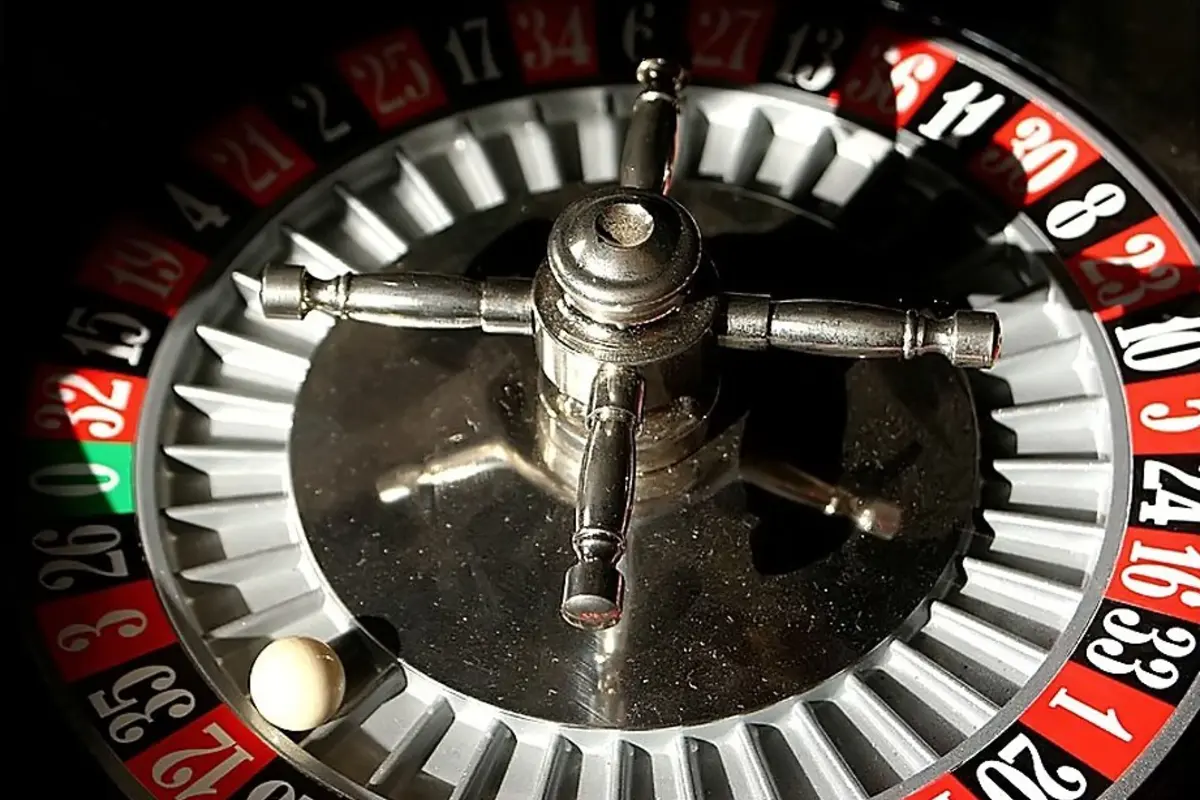
The January 2026 delta table focuses on bingo halls and live-dealer tables — categories that run at higher rates of operator-side change than slot reels.
Bingo hall delta
| Hall | Prior RTP | Jan RTP | Δ |
|---|---|---|---|
| Jili Bingo 75-Ball | 95.88% | 95.80% | -0.08 |
| Jili Bingo 90-Ball | 95.62% | 95.65% | +0.03 |
| Bingo Plus 90-Ball | 95.60% | 95.60% | 0.00 |
| Fa Chai 90-Ball | 95.54% | 95.58% | +0.04 |
Live-dealer delta
| Table | Prior RTP | Jan RTP | Δ |
|---|---|---|---|
| Lightning Roulette | 97.30% | 97.30% | 0.00 |
| Crazy Time | 96.12% | 96.08% | -0.04 |
| Monopoly Live | 96.23% | 96.23% | 0.00 |
Verdict
No movement past the ±0.30 point re-bench threshold. Every battleboard verdict from Q4 2025 carries forward to Q1 2026 without change.
How RLSH builds a delta table
Each quarterly delta table re-benches every published title against its prior-quarter observed RTP. The bench pulls the rolling 90-day spin sample (minimum 15,000 spins per slot title; minimum 28,000 cards per bingo hall; minimum 12,000 rounds per live-dealer table) and recomputes the average. A delta is flagged a "mover" only when it crosses the ±0.30 RTP point threshold — anything inside that band sits within ordinary sample variance and does not change a battleboard verdict.
Why bingo and live-dealer move differently from slots
Bingo halls and live-dealer tables include operator-side variables that pure RNG slots do not — community pot allocation, host pacing, side-bet take rates, and (for bingo) card-purchase distribution. Even a hall whose mathematical RTP is fixed by the provider can drift quarter-to-quarter on the observed side because of cadence and occupancy shifts. The January 2026 delta confirms the operator side has been quiet: every hall and table moved less than ±0.10 points, well inside any reasonable noise band.
Reading the table
| Category | Largest mover | Δ | Inside ±0.30? |
|---|---|---|---|
| Bingo hall | Jili Bingo 75-Ball | -0.08 | Yes |
| Live-dealer | Crazy Time | -0.04 | Yes |
What a re-bench would have triggered
- If Jili Bingo 75-Ball had moved -0.32 instead of -0.08, the Jili vs Bingo Plus showdown RTP row would flip from a 0.20-point Jili lead to a tie.
- If Crazy Time had moved -0.40 instead of -0.04, the Evolution flagship row in our Pragmatic vs Evolution provider showdown would lose its 96.08% anchor.
- If Lightning Roulette ever drifted below 97.00%, the Evolution multiplier-bet structure would no longer pencil out as the top live-dealer row on our slot-movers companion table.
Pros / cons of a quarterly cadence
| Pros | Cons |
|---|---|
| Damps short-run variance — a hot week of bonus rounds can't push a verdict | Lags fast operator-side changes (cadence tweaks, host rotations) by up to 90 days |
| Aligns with PAGCOR audit cycles for licensed PH operators | Cannot detect mid-quarter promotional RTP boosts |
| Sample floor enforces statistical confidence on every cell | Provisional titles (under-floor) are excluded, leaving gaps in the registry |
FAQ
Why ±0.30 RTP points as the re-bench threshold?
It is roughly two standard errors on a 15,000-spin sample at 96% RTP, so a delta inside the band is statistically indistinguishable from sample noise. Anything outside it is more likely a real shift than a coincidence.
Are operator-altered RTP variants tracked separately?
Yes. Where a provider ships multiple RTP versions (e.g. 96.50% / 95.50% / 94.00% Pragmatic Play builds), the registry tags the version under test and the delta column compares like-for-like only.
Why is Lightning Roulette so consistent?
Its 97.30% headline excludes Straight-Up bets — the multiplier mechanic on Straight-Ups runs at a separate, lower RTP. Aggregate observed numbers therefore bunch tightly around 97.30% as long as bet-mix stays steady on the floor.
Does the table include Bingo Plus side-bets?
No. Side-bets such as the Jackpot Fridays ₱500,000 progressive share of the pool are tracked in a separate side-bet RTP column and are not part of the main hall RTP row.
External references
- PAGCOR Electronic Gaming Licensing Department — eBingo regulatory pages
- Wikipedia — live dealer casino mechanics